The year 2026 has started with a shock. If you have been watching the markets, you saw the price of silver break barriers that many experts said were impossible. In January alone, silver prices shattered the $90 ceiling and even tested the $100 mark in some spot markets. This is not just a simple rally. This is a message.
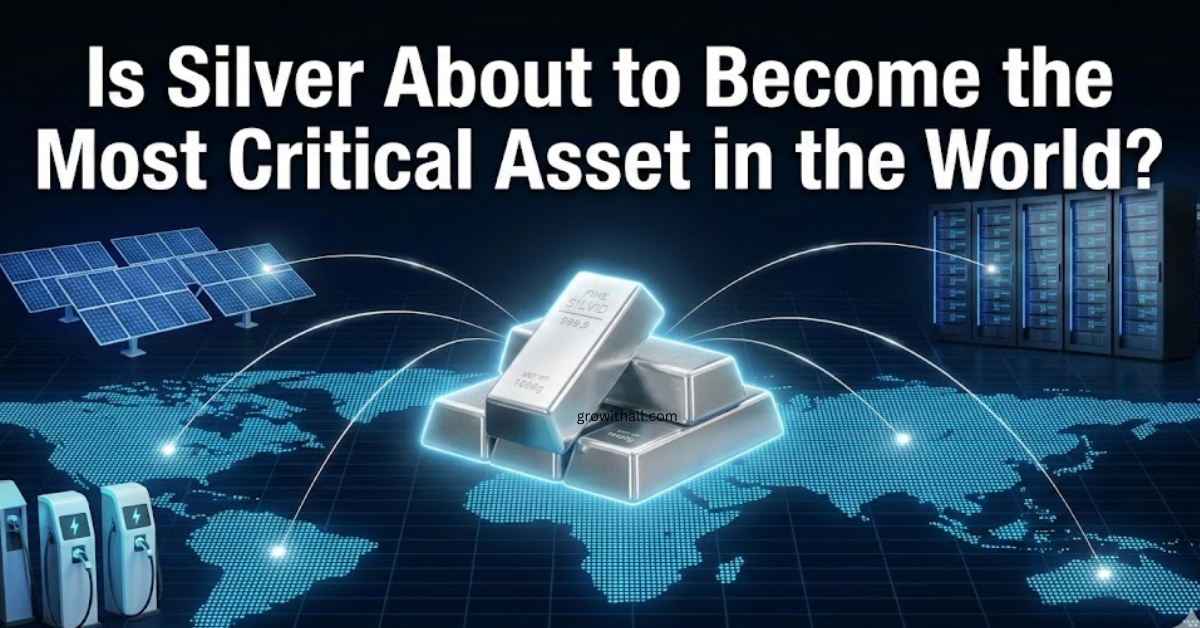
For decades, people looked at silver as the poor man’s gold. Investors bought it when they could not afford the yellow metal. But that story is dead. Today, silver is the lifeblood of the modern world. It is the secret ingredient in the solar panels on your roof. It is inside the electric vehicle parked in your driveway. It connects the chips in the AI data centers that run the internet.
We are seeing a perfect storm. Demand is exploding at the exact moment that supply is drying up. The vaults in London and New York are emptying out fast. Mines in Mexico and Peru are struggling to dig enough metal out of the ground. The math is simple, and it points to one direction for the future of silver.
Here is the deep dive into why 2026 might be the year silver changes everything.
The Great Inventory Drain
You need to look at the vaults to understand the panic. For years, the world had plenty of silver sitting in warehouses. Investors call these “above ground stocks.” These stockpiles acted like a safety valve. When demand went up, big banks would just sell some bars from the vaults, and the price stayed low.
That safety valve is gone.
In the second week of January 2026, something terrifying happened at the COMEX in New York. The COMEX is the main place where bankers trade silver futures contracts. In just seven days, buyers pulled more than 33 million ounces of physical silver out of the registered vaults. That was roughly 26% of the entire inventory available for delivery. It vanished in a week.
Why did this happen?
Big money investors stopped trusting paper promises. In the past, they were happy to hold a piece of paper that said they owned silver. Now, they want the real metal in their own armored trucks. They know that for every ounce of real silver in the vault, there are hundreds of paper claims trading on the market. If everyone asks for their metal at once, the system breaks.
We are seeing a “run on the bank,” but instead of cash, people are demanding silver bars. This is why the lease rates for silver have spiked. Banks are desperate to borrow silver to fill orders, but no one wants to lend it. This physical squeeze is the main reason prices have doubled since 2025.
Why Mines Cannot Just Dig More?
You might ask a simple question. If the price is high, why don’t miners just dig more silver?
It sounds logical, but geology does not care about logic.
The first problem is how we find silver. Most silver is not found in “silver mines.” About 72% of the world’s silver comes as a byproduct. Miners dig for copper, lead, or zinc, and they find a little bit of silver on the side. This is a massive issue for supply elasticity.
Imagine a copper miner in Chile. He digs for copper because the price of copper is high. If the price of silver doubles, he does not care. He will not build a new billion dollar mine just to get a little extra silver. His main business is copper. This means silver supply does not react to silver prices. It stays flat even when prices scream higher.
The second problem is age. The world’s great silver mines are getting old.
Mexico has been the king of silver for centuries. But its giant mines are seeing their ore grades drop. They have to dig up more rock just to get the same amount of metal. In 2025, global mine production fell to about 835 million ounces. This is down 7% from the peak in 2016. We are digging less silver today than we were ten years ago, even though we need it more than ever.
New projects take time. If you find a silver deposit today, it takes about 10 to 15 years to get the permits and build the mine. Nothing can fix the shortage in 2026 or 2027. The supply cake is baked, and it is too small to feed everyone.
The Solar Beast is Hungry
The biggest mouth at the table is the solar industry.
Ten years ago, solar panels were a niche product. Now they are the main source of new energy on Earth. In 2026, the world is expected to install 665 gigawatts of solar power. To put that in perspective, that is enough energy to power hundreds of millions of homes.
Every single one of those solar panels needs silver.
Silver is the best conductor of electricity known to man. It is better than copper. It is better than gold. Solar manufacturers use a silver paste to print the wires on the front of the silicon cells. Without silver, the electrons cannot move efficiently, and the panel does not work well.
Engineers have tried to use less silver. They call this “thrifting.” They made the lines thinner and used new alloys. But the sheer volume of new panels has overwhelmed those savings.
Plus, the technology is changing. The old style of solar cell, called PERC, is being replaced by a new type called TOPCon. These new cells are more efficient, but they use 50% more silver. This is a nightmare for supply.
In 2026, the solar industry alone will swallow between 120 and 125 million ounces of silver. That is roughly 15% of all the silver mined in the world. And this number is only going up. By 2030, some analysts fear that solar could consume 20% or even 30% of global supply.
The Electric Vehicle Revolution
The car in your driveway is changing, and that change demands silver.
A traditional gas car uses a tiny amount of silver. It is mostly used for simple switches and contacts. An electric vehicle, or EV, is a different beast. It is basically a giant computer on wheels.
An EV uses almost twice as much silver as a gas car. You find it in the battery management system. You find it in the heavy cables that carry the high voltage current. You find it in the thousands of electrical connectors that keep the car running.
In 2026, automakers plan to produce around 15 million electric vehicles. This will suck up another 75 million ounces of silver.
But it is not just the cars. It is the chargers.
Governments around the world are building millions of charging stations. A fast charger needs to push a massive amount of electricity into a car battery in twenty minutes. You cannot do that with cheap wires. You need high quality connectors that can handle the heat and the load. That means silver.
As the world bans gas cars and moves to electric, we are locking in a permanent, structural demand for silver that will last for decades.
The AI and Tech Factor
We all talk about Artificial Intelligence. We talk about ChatGPT and Gemini and how they change our work. But we rarely talk about the hardware that makes them run.
AI lives in data centers. These are massive warehouses full of servers running 24 hours a day. These chips get incredibly hot, and they use mountains of power.
To keep these systems stable, manufacturers are using more silver. Silver is excellent at thermal management. It helps move heat away from delicate chips. It is also the most reliable material for the billions of tiny solders that hold the electronics together.
Then there is 5G. The new cellular networks operate at very high frequencies. Silver is the preferred material for 5G components because it maintains the signal integrity better than copper. As 5G towers roll out across India, Europe, and the US, they are consuming silver in places we never looked before.
The tech sector is not price sensitive. If Apple or Nvidia needs silver to make a $1,000 chip work, they will pay $50 an ounce. They will pay $100 an ounce. They will pay $500 an ounce. The cost of the silver is tiny compared to the value of the final product. This means industrial buyers will keep buying even if the price skyrockets.
The Deficit is Real
When you add it all up, the math is scary.
The Silver Institute, which tracks these numbers, says we are in our fifth straight year of a deficit. This means the world uses more silver than we dig up.
In 2025, the gap was nearly 100 million ounces. The cumulative deficit over the last five years is closing in on 900 million ounces.
We have been filling this gap by eating into our savings. We used the bars sitting in London. We used the bars sitting in New York. But now those shelves are bare.
We are entering a phase called “price discovery.” In a normal market, supply meets demand. In a broken market, price has to rise high enough to destroy demand.
But who will stop buying?
Will people stop buying iPhones? No. Will governments stop building solar panels? No. Will armies stop building missiles (which also use silver)? No.
Demand is “inelastic.” This creates the setup for a price explosion.
Price Predictions for 2026 and Beyond
So where is the price going?
In 2025, silver gained 147%. It was the best performing asset for many investors. Early 2026 has already seen prices touch $100.
Conservative banks like Citi are forecasting prices to settle around $70 or $80. They think the market will cool off after the big run.
But the independent analysts are looking much higher. They see the physical shortage and they see the panic in the COMEX. Many of them believe silver will trade between $120 and $150 by the end of 2026.
Looking further out to 2030, the predictions get wild. If the dollar continues to weaken and the green energy boom accelerates, we could see silver prices that look like fantasy today. Some models suggest $200 or more is possible if the currency system becomes unstable.
Remember the Gold to Silver ratio. Historically, it takes about 15 ounces of silver to buy one ounce of gold. Today, that ratio is still much higher, around 50 or 60 to 1. If silver just returns to its historical average, the price has to double or triple from here, even if gold stays flat.
How Do You Invest in This?
If you believe this story, you might want to know how to get involved. You have three main paths.
1. Physical Metal This is the safest way. You buy silver coins or bars and you hold them. You can buy American Eagles, Canadian Maples, or simple 1 kilogram bars.
- Pros: You own it. No counterparty risk. If the internet goes down, you still have your wealth.
- Cons: You have to store it. It is heavy. You pay a “premium” over the spot price to buy it.
2. ETFs and Funds You can buy shares in a fund that owns silver. The most famous is SLV, but many experts prefer the Sprott Physical Silver Trust (PSLV).
- Pros: Easy to click a button and buy. Low fees. Easy to sell.
- Cons: You do not hold the metal. If the financial system breaks, you might just own a paper claim.
3. Mining Stocks You can buy shares in companies that dig silver. Companies like Pan American Silver, First Majestic, or Hecla Mining.
- Pros: “Leverage.” If silver goes up 10%, a mining stock might go up 30%. When they make money, they pay dividends.
- Cons: Risky. A mine can flood. A government can raise taxes. Poor management can ruin a good company.
The Warning Signs
It is not all sunshine. Investing in silver is a wild ride. The price crashes just as fast as it goes up.
Volatility is the price of admission. You might see silver drop $10 in a single day. The big banks trade paper contracts to push the price around. You need a strong stomach to hold silver.
Also, watch out for a recession. If the global economy crashes hard, factories might close. If factories close, they buy less silver for electronics. This could hurt demand in the short term. But remember, the green energy demand is government mandated. It might keep going even in a recession.
Conclusion
The future of silver in 2026 is not about jewelry or silverware. It is about the survival of the modern lifestyle.
We have built a world that runs on electricity, and silver is the wire that connects it all. We have ignored the supply for too long. We let the mines get old. We drained the vaults. And now, the bill is coming due.
The data is clear. The deficit is real. The industrial need is desperate.
We are witnessing the revaluation of a strategic asset. Silver is moving from a forgotten metal to a cornerstone of the future. Whether the price goes to $100, $150, or beyond, one thing is certain. The days of cheap silver are gone, and they are not coming back.
The only question left is simple. Are you watching from the sidelines, or are you part of the movement?